Mission control

Missions that made history

Detailed infographics of the great space missions: trajectory, crew, rocket and key facts. Open them full screen, zoom in and download them in high resolution.

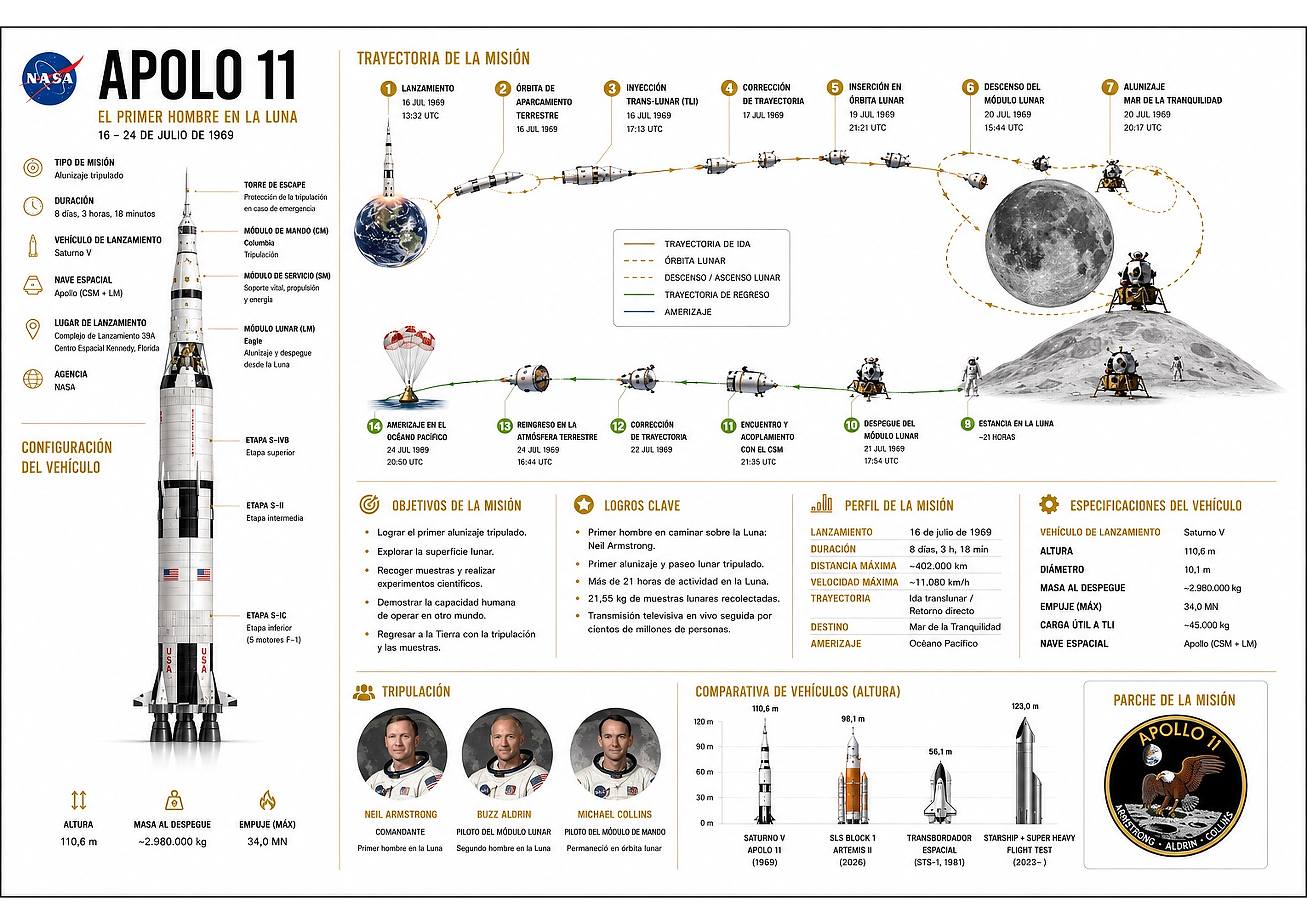
July 16 – 24, 1969

The first man on the Moon

🏢 NASA🚀 Saturn V

Neil Armstrong and Buzz Aldrin landed in the Sea of Tranquility aboard the Eagle module while Michael Collins orbited in Columbia. They spent more than 21 hours on the Moon and brought back 21.55 kg of samples.

  • 8 d 3 h 18 min
  • 3 crew
  • Saturn V · 110.6 m
  • ~402,000 km
⇩ PNG

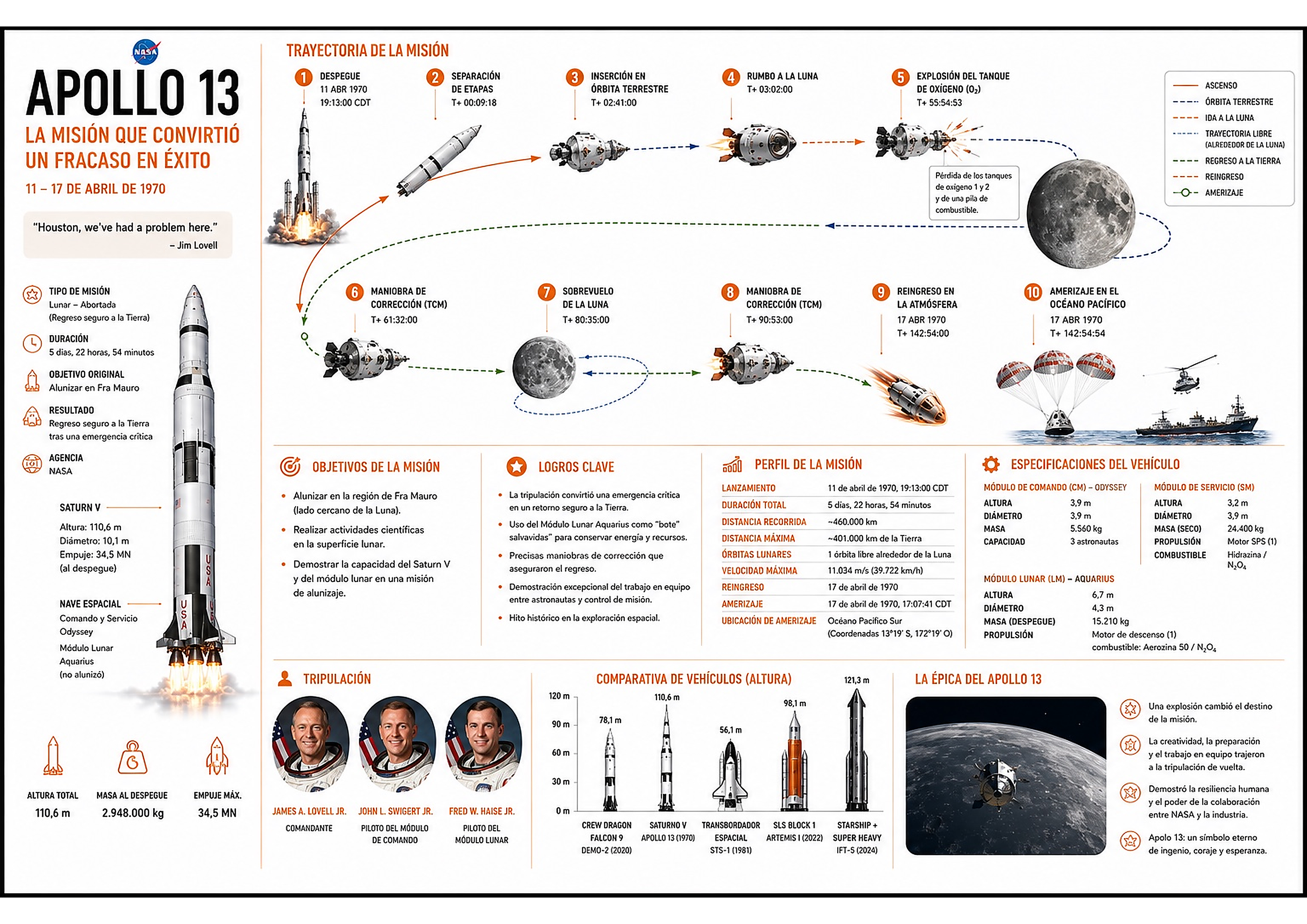
April 11 – 17, 1970

The mission that turned failure into success

🏢 NASA🚀 Saturn V

An oxygen tank explosion forced the crew to abort the Fra Mauro landing. Using the Aquarius lunar module as a “lifeboat” and a free-return trajectory around the Moon, the crew made it home safe and sound.

  • 5 d 22 h 54 min
  • 3 crew
  • ~401,000 km from Earth
  • Saturn V · 110.6 m
⇩ PNG

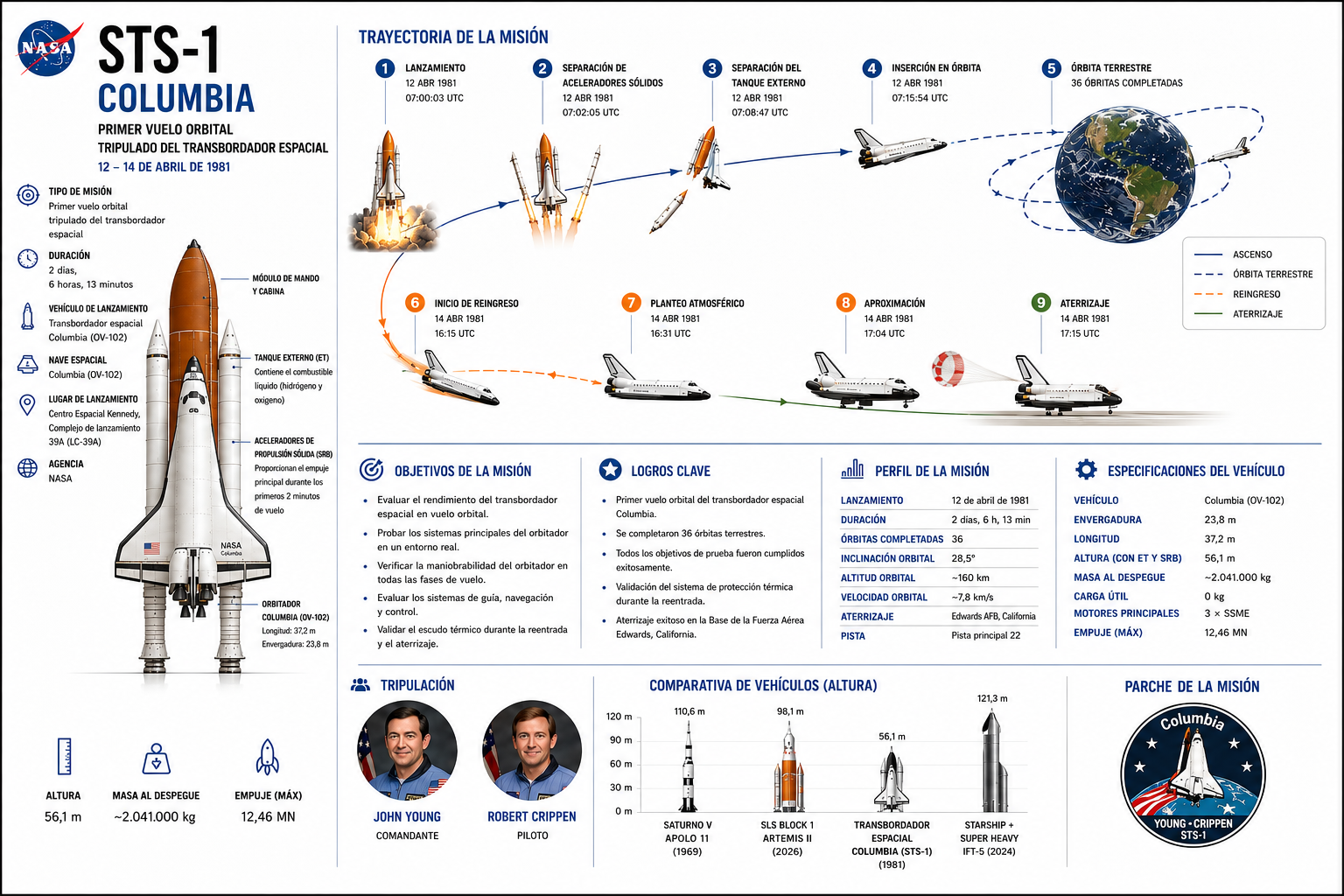
April 12 – 14, 1981

First crewed orbital flight of the Space Shuttle

🏢 NASA🚀 Space Shuttle Columbia (OV-102)

John Young and Robert Crippen debuted the Space Shuttle with 36 orbits of Earth, validating the heat shield on reentry and landing at Edwards Air Force Base (California).

  • 2 d 6 h 13 min
  • 2 crew
  • 36 orbits
  • 56.1 m
⇩ PNG

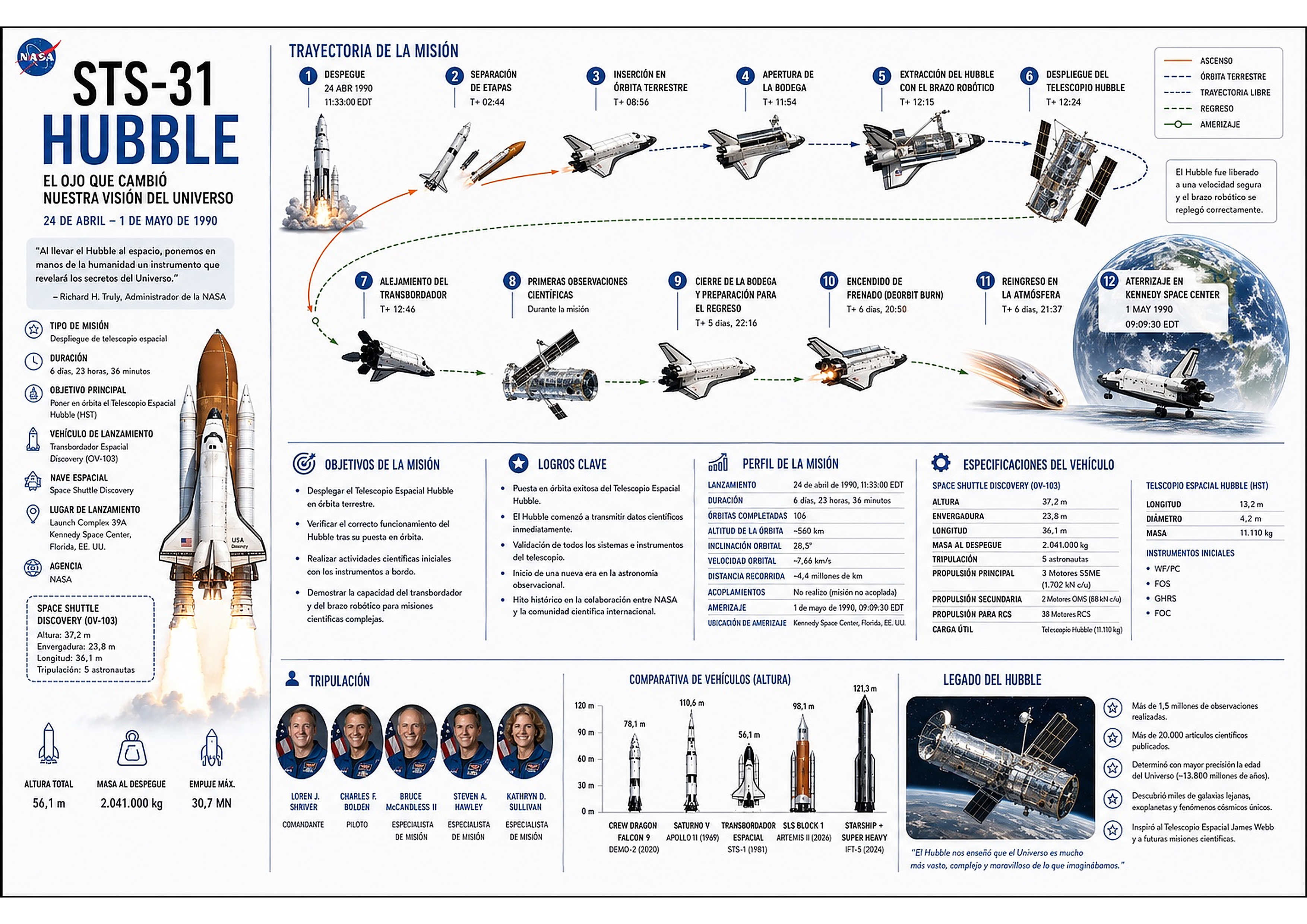
April 24 – May 1, 1990

The eye that changed how we see the universe

🏢 NASA🚀 Space Shuttle Discovery (OV-103)

Discovery placed the Hubble Space Telescope in orbit about 560 km up with its robotic arm. Since then, Hubble has made more than 1.5 million observations and helped measure the age of the universe.

  • 5 d 23 h 36 min
  • 5 crew
  • Orbit ~560 km
  • Hubble 11,110 kg
⇩ PNG

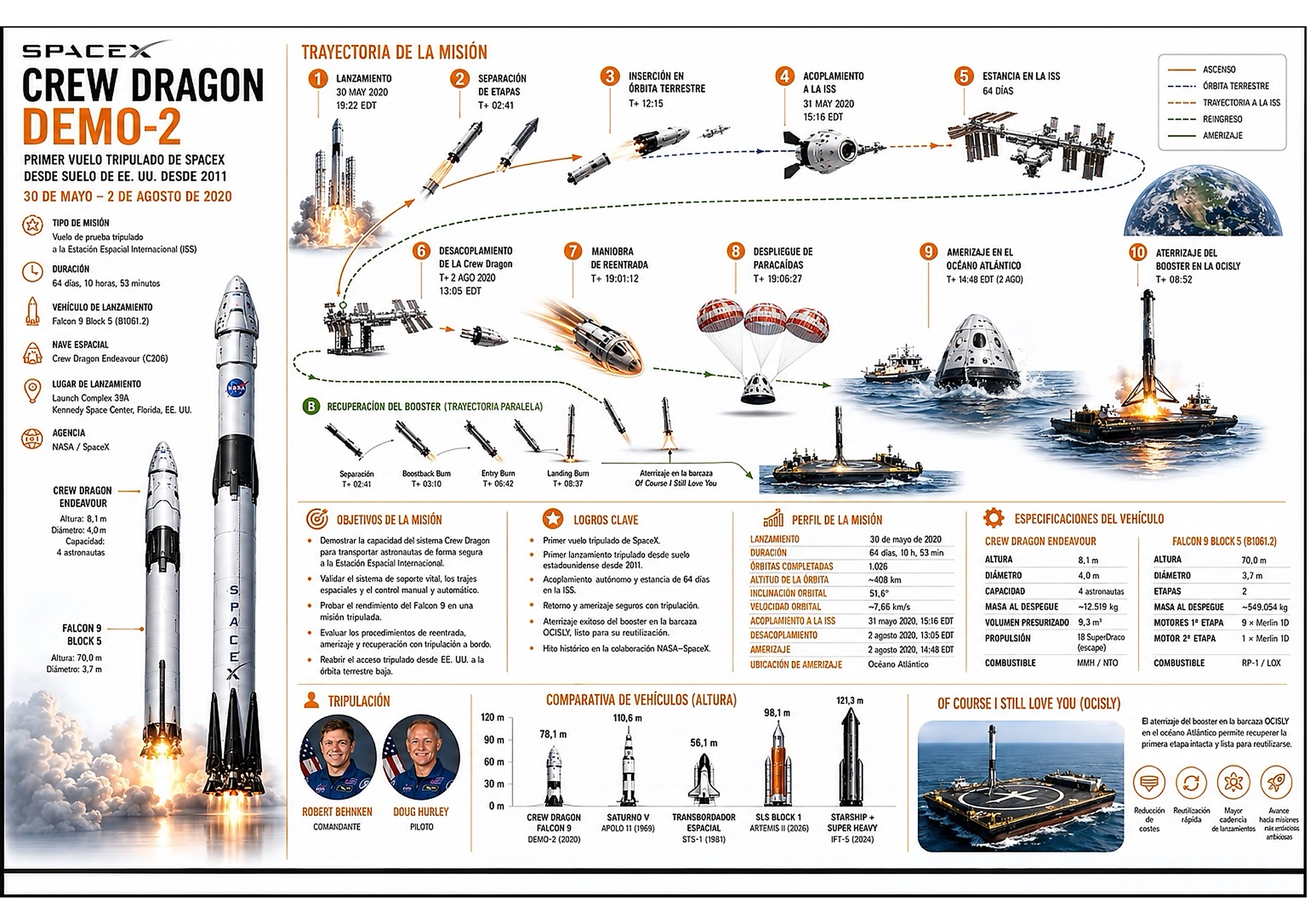
May 30 – August 2, 2020

SpaceX's first crewed flight

🏢 NASA / SpaceX🚀 Falcon 9 Block 5

Bob Behnken and Doug Hurley flew to the ISS aboard Crew Dragon Endeavour: the first crewed launch from US soil since 2011. They spent 64 days at the station and splashed down in the Atlantic.

  • 64 d 10 h 53 min
  • 2 crew
  • Falcon 9 · 70 m
  • Booster recovered
⇩ PNG

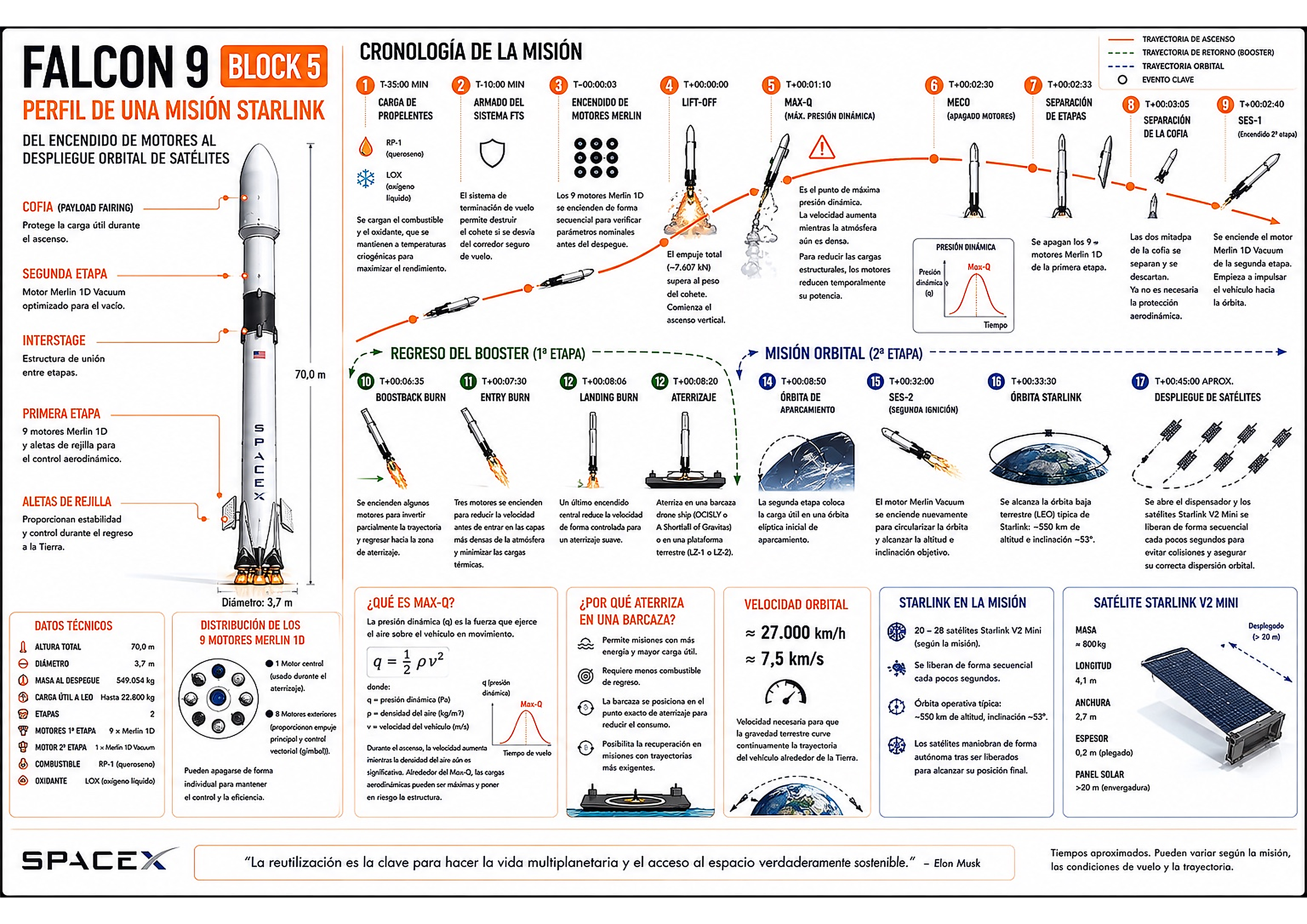
Typical profile (no date)

Profile of a Starlink mission

🏢 SpaceX🚀 Falcon 9 Block 5

Timeline of a typical Starlink launch: Max-Q, stage separation, booster return to a droneship or landing zone, and deployment of 20–28 Starlink V2 Mini satellites into low orbit (~550 km).

  • ~45 min to deployment
  • 70 m tall
  • 9 Merlin 1D engines
  • Reusable booster
⇩ PNG

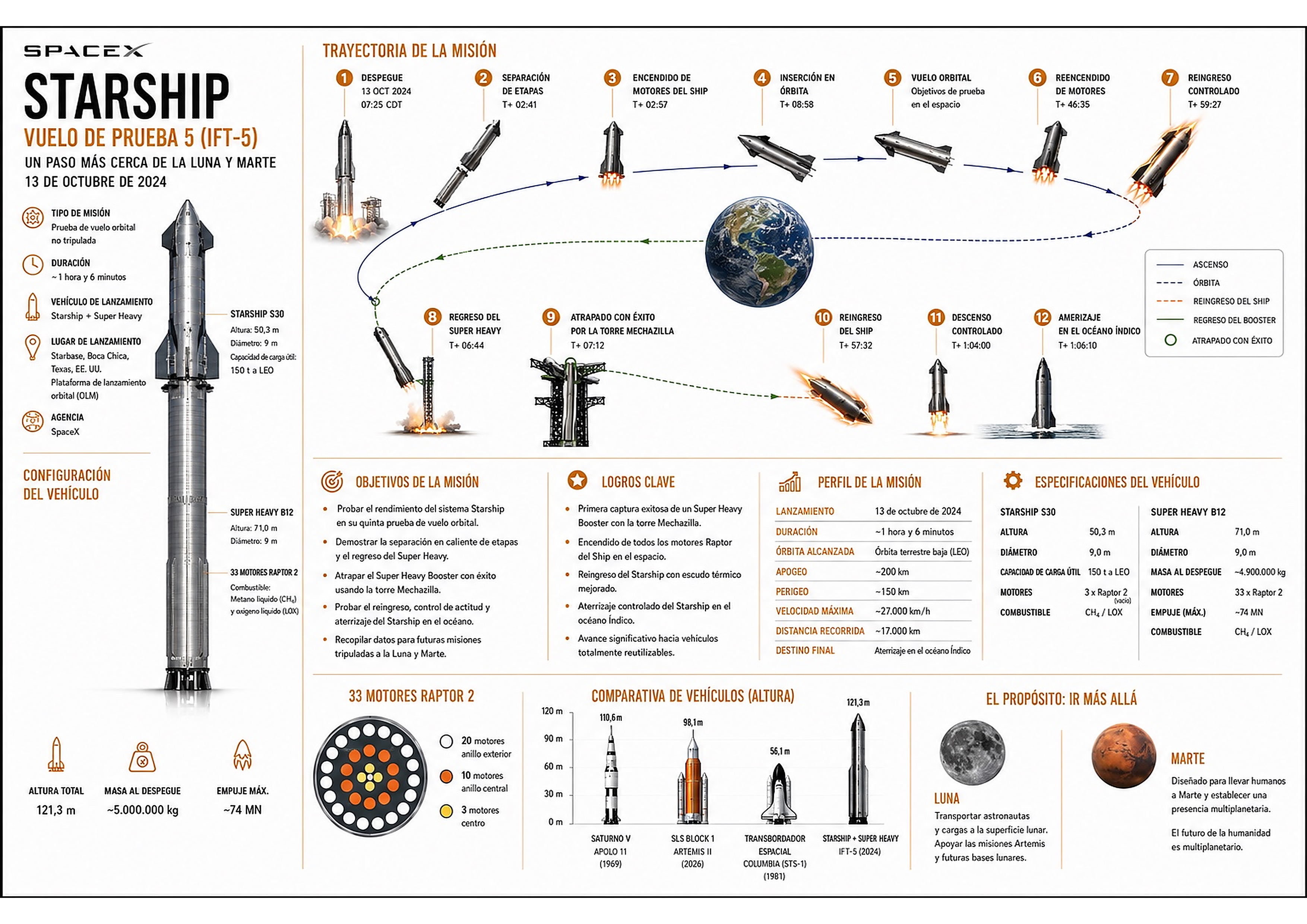
October 13, 2024

Test flight 5: one step closer to the Moon and Mars

🏢 SpaceX🚀 Starship + Super Heavy

Starship's fifth test flight: for the first time, the Mechazilla tower caught Super Heavy on its return, while the ship completed its flight and made a controlled splashdown in the Indian Ocean.

  • ~1 h 6 min
  • Uncrewed
  • 121.3 m
  • 33 Raptor 2 engines
⇩ PNG

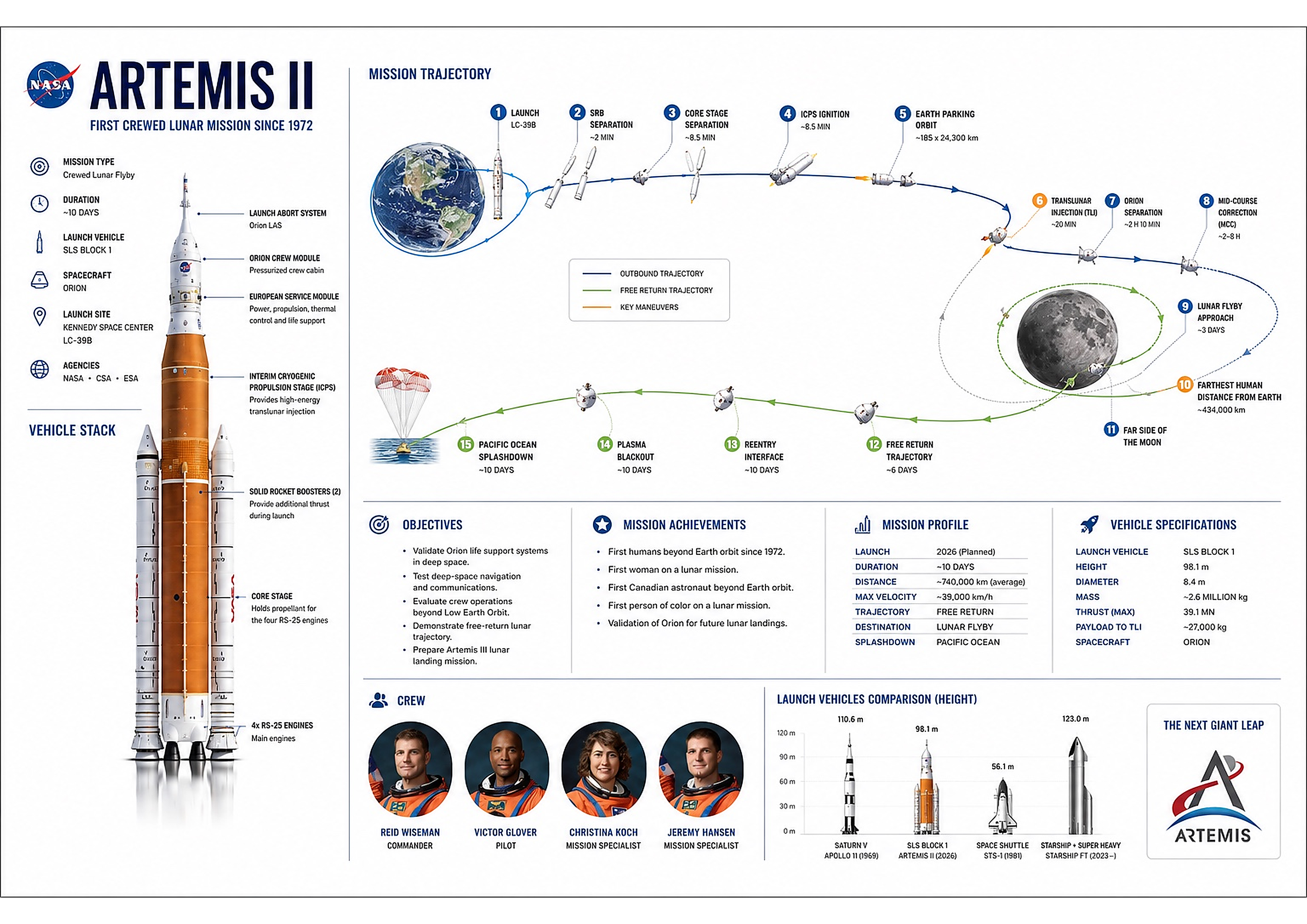
2026

First crewed mission to the Moon since 1972

🏢 NASA · CSA · ESA🚀 SLS Block 1

Four astronauts fly around the Moon aboard Orion on a free-return trajectory, reaching about 434,000 km from Earth to test the systems before Artemis III. The infographic is in English.

  • ~10 days
  • 4 crew
  • SLS · 98.1 m
  • ~434,000 km
⇩ PNG

Audio

Narrated stories

Listen to the great missions told as stories

Loading stories…

Scroll to Top